

Bedroom with blackout curtains and soft evening lighting for better sleep

How To Create A Bedroom That Helps You Sleep Better

A better night’s sleep does not always begin with a big change. Sometimes it starts with the room itself: the light coming through the curtains, the sound outside, the temperature under the duvet, and the small habits that tell your body it is time to switch off.

If your bedroom feels busy, bright, or uncomfortable, sleep can become harder than it needs to be. The good news is that you can make the space more sleep-friendly without turning your whole home upside down. A few simple choices can make your bedroom feel calmer at night and easier to wake up from in the morning.

Start with light

Light has a strong effect on your sleep rhythm. Bright light in the evening can make your brain feel as if the day is still going, while a darker room helps your body settle. If streetlights or early morning sun come through your windows, blackout curtains can make a real difference.

Try using softer lighting in the last hour before bed. A bedside lamp is usually better than bright overhead lights, especially if you are reading, stretching, or getting ready for sleep. The aim is not to make the room gloomy. It is to make it feel like the day is winding down.

Keep the room cool and comfortable

Many people sleep better in a cooler room. If you often wake up hot, restless, or tangled in heavy bedding, look at the basics first. Use breathable bedding, keep the room well ventilated where possible, and choose layers that you can adjust through the night.

Your mattress and pillows matter too. They do not need to be fancy, but they should support the way you sleep. If you wake up with a stiff neck or sore back, your pillow height, mattress firmness, or sleeping position may be working against you.

Make your bedside table boring, in the best way

A peaceful bedside table can help you avoid the little distractions that stretch bedtime later and later. Keep the things you actually need close by, such as water, a book, tissues, or an alarm clock. Try moving your phone far enough away that checking it is no longer automatic.

This small change can be surprisingly helpful. A phone beside the pillow makes it easy to scroll, check messages, or look at the time too often. Those habits can make sleep feel like something you have to chase instead of something you can ease into.

Reduce noise where you can

Noise does not have to fully wake you to affect your rest. Traffic, neighbours, pets, or a snoring partner can all disturb the quality of your sleep. If you cannot control the source, try soft furnishings, heavier curtains, a fan, or gentle background sound to make sudden noises less noticeable.

If snoring is the problem, it is worth taking seriously. Snoring can disturb both the person snoring and the person sleeping next to them. Small changes such as side sleeping, reducing alcohol close to bedtime, and keeping nasal passages clear may help, but ongoing loud snoring should be discussed with a health professional.

Give your room a morning reset

A sleep-friendly bedroom is not only about nighttime. What you do in the morning can make the next night easier too. Open the curtains, let in fresh air, and make the bed if that helps the room feel settled. These are small cues, but they can separate the day from the night in a useful way.
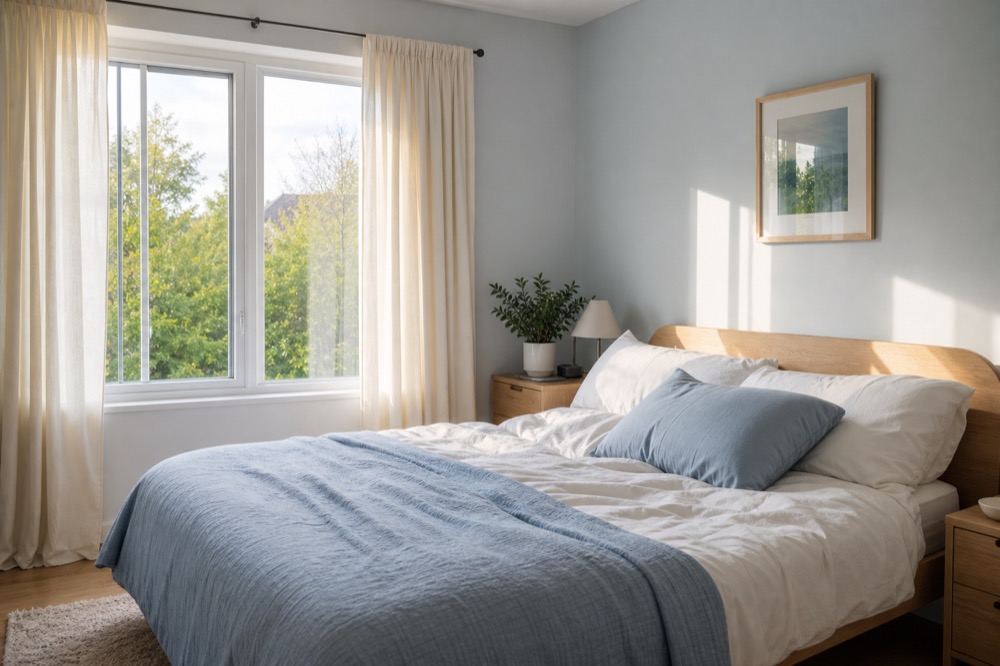
You do not need a perfect bedroom to sleep well. Start with one change that feels easy: block more light, cool the room down, clear the bedside table, or move your phone away from the bed. Better sleep is often built from ordinary habits repeated night after night.

Sleep Hygiene

Sleep Hygiene Tips

Think of all the factors which could impact a good night’s sleep – coming from work stress and family obligations to unforeseen problems, just like illnesses. It is no surprise that quality sleep is at times elusive. Following healthy sleep habits could make the real difference in between restlessness and restful sleep. Scientific study has recognized a number of practices and habits-known as “sleep hygiene”- which will help anybody increase the hours they spend sleeping, even those whose sleep is impacted by insomnia, jet lag, or perhaps shift work.

Sleep hygiene may appear unimaginative, however it just may be the greatest way of getting the sleep you require in this 24/7 age. Though you may not be able to handle the factors which hinder your sleep, you could follow habits which motivate better sleep. Getting good sleep is essential to maintain healthy. There are numerous things that that you can do to promote good sleep and sleep hygiene, and eventually improve sleep.

Stick to a sleep schedule

Sleeping Schedule

Put aside a maximum of 8 hours for sleep. The suggested amount of sleep for a healthy adult is no less than 7 hours. Most of the people have no need for greater than 8 hours in bed to do this goal.

Go to bed and wake up at the same time every single day. Make an effort to limit the difference on your sleep schedule during weeknights and weekends to a maximum of 1 hour. To be consistent reinforces your own body’s sleep-wake cycle.

If you don’t fall asleep within about 20 minutes, leave your bedroom and do something relaxing. Read or listen to soothing music. Go back to bed when you’re tired. Repeat as needed.

Focus on what you eat and drink

Do not go to sleep hungry or stuffed. Particularly, stay away from heavy or large meals in just a couple of hours prior bedtime. Your discomfort may keep you up.

Nicotine, caffeine as well as alcohol should have caution, as well. The stimulating effects of nicotine and caffeine can take several hours to wear off and may cause havoc on quality sleep. And although alcohol may make you feel sleepy, it could interrupt sleep later at night.

Come up with a restful environment

Sleep in Peaceful Environment

Create a room which is well suited for sleeping. Generally, what this means is cool, dark and peaceful. Exposure to light could make it more difficult to go to sleep. Stay away from continuous use of light-emitting screens right before bedtime. Think about using room-darkening shades, ear plugs, a fan or other gadgets to make an environment that fits your needs.

Carrying out calming activities prior to bedtime, just like having a shower or making use of relaxation techniques, may encourage better sleep.

Restrict daytime naps

Daytime Nap

Lengthy daytime naps could hinder evening sleep. If you opt to nap, restrict yourself to as much as 30 minutes and prevent doing this late in the day.

In case you work evenings, however, you may want to nap late on the day prior to work to help with making up your sleep debt.

Include physical exercise in your daily routine

Daily physical activity could boost better sleep. Avoid staying active too near to bedtime, however.

Spending time outdoors each day may be beneficial, too.

Cope with worries

Try to solve your worries or problems before going to bed. Write down what’s in your concerns and then set it aside for tomorrow.

Stress management may help. Begin with the basics, including becoming organized, setting up priorities and assigning tasks. Meditation could also relieve anxiety.